Treat a bedroom humidifier as equipment with a care routine
A bedroom humidifier adds a maintenance job as well as moisture. Before making it part of skin care, know which appliance you own, how it is filled and cleaned, and what you will do when the room becomes damp. This guide organizes the work around the actual machine and its instructions, rather than using visible mist as proof that the bedroom needs more of it.
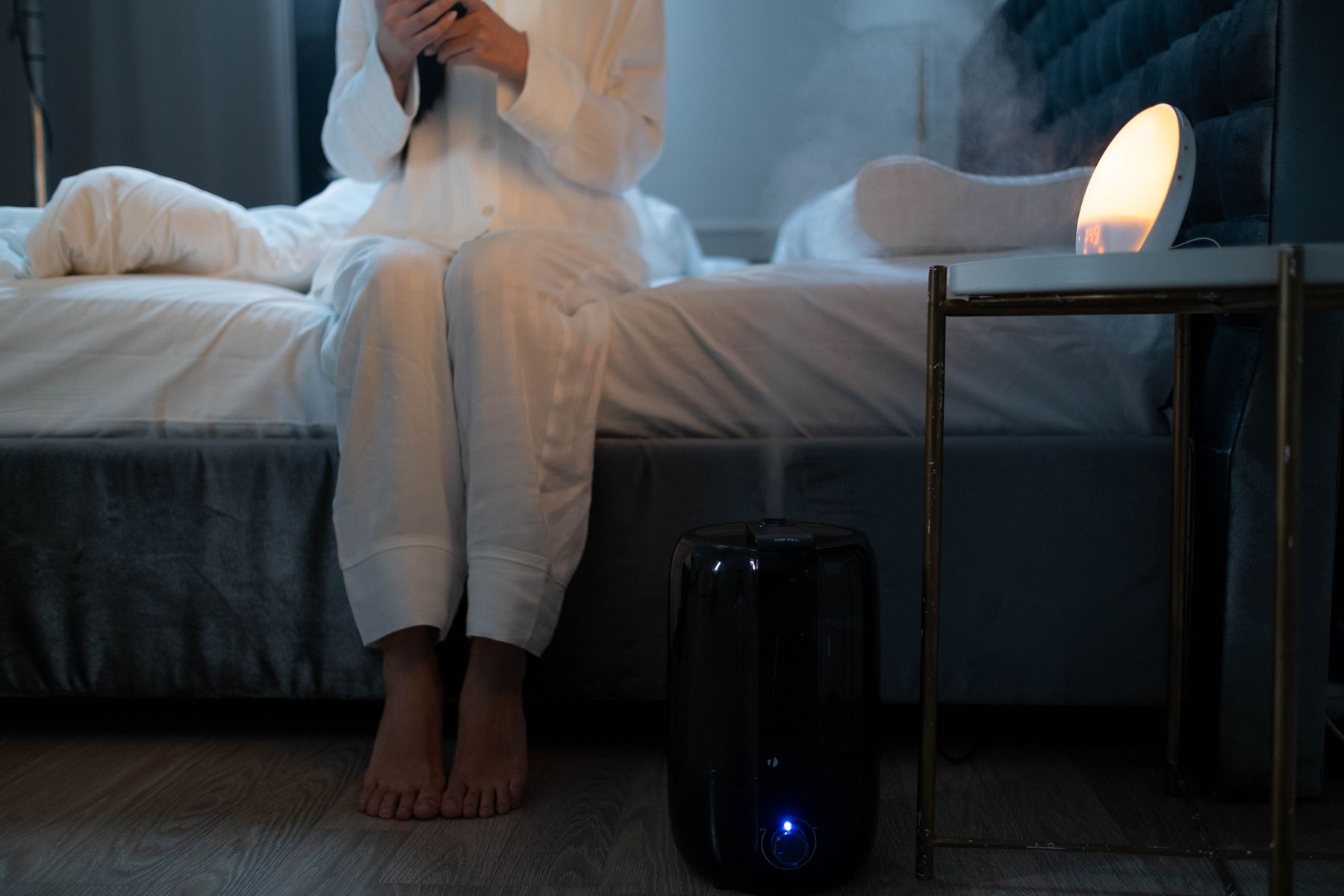
Identify the device before making a maintenance plan
Find the model name on the appliance and open its manufacturer’s manual. Distinguish a room humidifier from a fragrance diffuser and from a central system connected to heating equipment. A teardrop shape or a photograph of mist cannot answer that question. If you inherited the appliance without instructions, look up the exact model before filling it or adding anything to the tank.
Locate the parts described in the manual: removable tank, base, outlet, any wick or cartridge, and electrical components. Check which parts can contact water and which cannot. Do this with the appliance unplugged. Keep the diagram accessible at the sink so that cleaning does not become a guessing exercise involving a wet base and a loose cable.
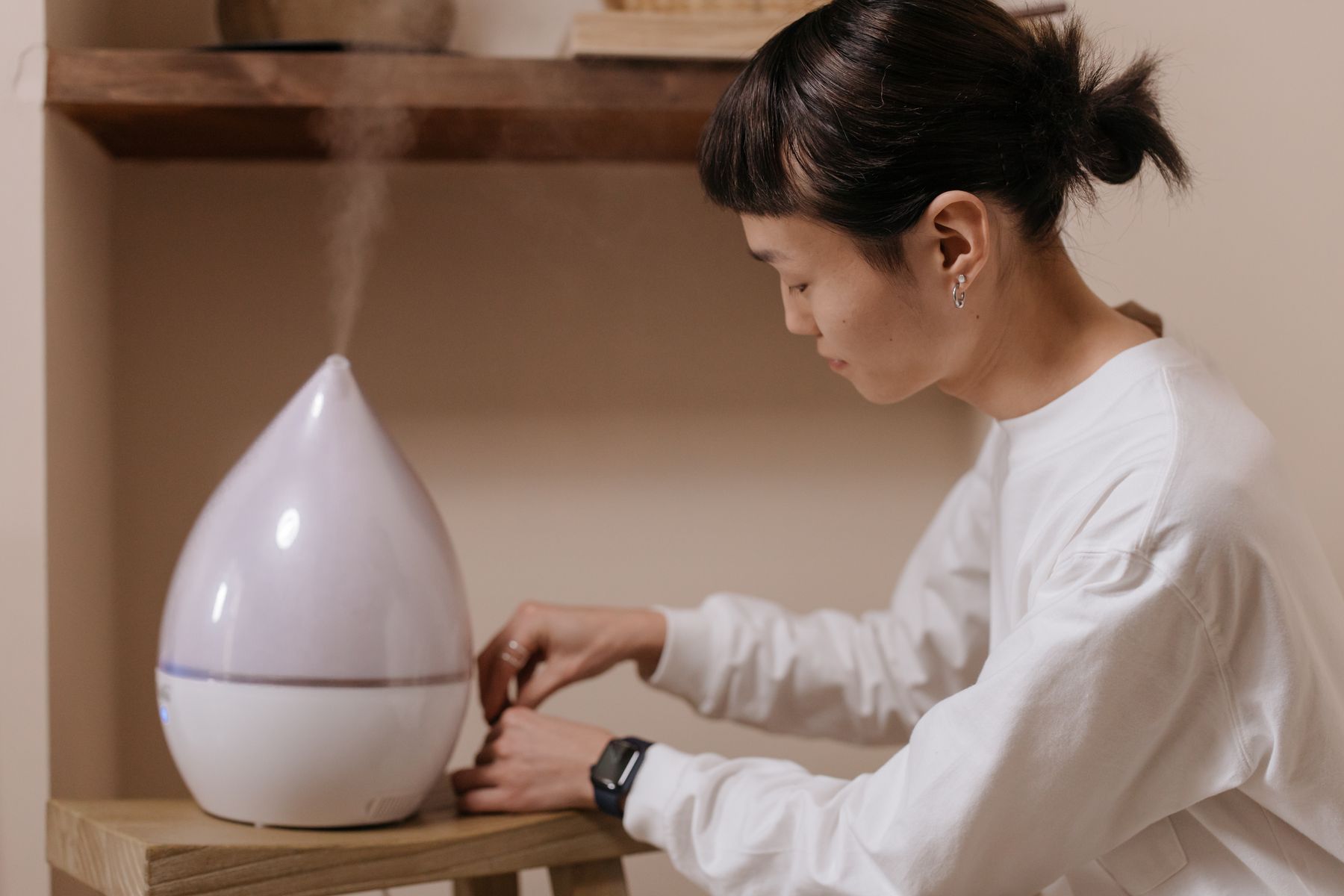
Decide whether the room needs humidification
The EPA advises using a humidifier only when conditions require it and keeping indoor relative humidity at or below 50 percent. A hygrometer supplies a measurement; the thickness of visible mist does not. Read the instrument according to its directions and place it sensibly away from the immediate plume, so you are assessing the room rather than a spray of output.
Walk through the bedroom before choosing a position. Identify curtains, carpeting, bedding and nearby surfaces that could become damp. Check the appliance’s required clearances and stable placement. Do not copy a stock photograph as an installation diagram. The right practical question is whether you can run and maintain your particular device without wetting the surrounding area.
Make daily water handling a distinct task
For portable humidifiers, the EPA recommends unplugging before emptying, drying the tank surfaces and refilling daily. Treat this as replacing the water, not continually topping up yesterday’s contents. Arrange the task when a sink and a place for the clean parts are available. Carry a removable tank using the method specified by its maker, rather than lifting the entire appliance by a handle that may belong only to the tank.
Set the electrical section down away from splashes. Check the cap and any seal as you reassemble, without forcing misaligned threads. If a seal is damaged or a tank leaks, stop and obtain the correct replacement or manufacturer advice. A folded towel under a leaking unit is not a repair plan.
Choose the water for the machine, not for its marketing image
EPA guidance explains that ultrasonic and impeller humidifiers can disperse tank minerals and recommends lower-mineral water; bottled distilled water generally contains fewer minerals than tap water. Read both the bottle label and the appliance manual. The words spring water and distilled water describe different products, while an attractive water bottle does not establish suitability.
If a compatible cartridge or filter is involved, identify its replacement part and schedule from the manufacturer. Keep a spare only if you can store and recognize it properly. Do not use a random filter that happens to fit the opening. When comparing ownership costs, include the actual water and replacement parts you can obtain, not only the initial price of the machine.
Give cleaning enough space to finish
The EPA recommends cleaning portable humidifiers every third day, following manufacturer directions for cleaning agents, and rinsing thoroughly afterward. Open the manual to the cleaning procedure before starting. Have the approved tools ready and distinguish a routine tank emptying from the full cleaning process. Do not mix cleaning chemicals or substitute a stronger concentration because a deposit looks stubborn.
Work on one disassembled appliance at a time so that small caps and seals remain identifiable. Follow the instructions about rinsing, drying and reassembly. If you cannot reach an internal surface or a part stays visibly dirty, ask the manufacturer how to handle it. Running the unit to hide a smell with fragrance would leave the maintenance problem unresolved.
Use room conditions to change operation
EPA guidance says to reduce output or use intermittently if the surroundings become damp, and to respond to condensation by changing use, setting or position. Notice what happens around the machine during ordinary operation. A damp tabletop, wet curtain or condensation on a window is a reason to reassess, not a sign that the moisture treatment is especially effective.
When adjusting, change the actual operating setting or location within the manual’s requirements and check the room again. Do not drape absorbent fabric around the outlet. If you cannot prevent unwanted dampness in the available space, stop using the unit there. Skin comfort is not a reason to accept continuing moisture damage in the bedroom.
Plan for missed maintenance and seasonal storage
Choose a clear response to a busy day: if you cannot complete the required care, leave the humidifier off rather than relying on appearance. Store the manual and model information where another household member can find them. If two people share the job, tell each other when water was changed and when the full cleaning was completed so neither assumes the other did it.
For storage, follow the manufacturer and EPA directions: clean, dry the parts fully and handle used replaceable materials as instructed. Recheck the appliance before the next season instead of adding water to a dusty stored tank. If you develop respiratory symptoms that seem associated with humidifier use, EPA advises stopping use and contacting a physician. A care log is useful background, but cannot diagnose the cause.
A bedside purchase becomes an ownership decision
Ari buys a portable unit, then discovers that its tank care requires more sink space than expected. Instead of leaving it running all week, Ari reads the exact manual, arranges a stable drying space and checks the room with a hygrometer. On a night when the curtain becomes damp, the setting is reduced and the placement reassessed. If maintenance cannot be done before a trip, the appliance is cleaned and stored rather than left full and idle.
Questions
Does visible mist show the bedroom is at the right humidity?
No. Mist shows output from the device. Use an appropriate humidity instrument and inspect the surrounding room. A photo or a dense plume cannot verify the room’s humidity or whether the tank is clean.
Can I add essential oil to make the room smell clean?
Only put substances in an appliance when its exact instructions permit them, and do not use fragrance as a substitute for cleaning. A diffuser function, if present, does not cancel the water handling and maintenance requirements for the machine.
Sources and photography
Photographs are credited beside each image. Their recorded capture dates describe the images; check the current visitor or product information linked above when planning.