Make face washing a fingertip task instead of a scrubbing session
A useful face wash removes what needs removing without becoming a repeated scrubbing session. Start with an appropriate cleanser, a comfortable sink setup and a clear stopping point. This guide turns the American Academy of Dermatology’s gentle-handling advice into a practical routine you can follow, troubleshoot and describe accurately if you need help.
Begin with the task you actually have
Before turning on the tap, identify what is on your face: an ordinary day’s residue, makeup, a water-resistant product or something with its own removal instructions. A cleanser may not be intended to remove every product in one pass. Read the relevant directions while the bottles are still dry and easy to handle. If you have an individual treatment plan, keep that instruction beside the product rather than relying on a remembered online routine.
Choose one ordinary washing session to review. The question is how you handle the wash, not how many new products you can add. Put any optional brush, grainy scrub or textured cloth aside while you think through its purpose. If you cannot explain what an extra action contributes, do not assume the action is necessary simply because it appears in a video.
Read the bottle before choosing the amount
AAD recommends a gentle, non-abrasive cleanser without alcohol for this basic routine. That is a starting point for product selection, not a promise that one bottle suits every person. Check the actual product’s intended area, amount and directions; a medicated wash or eye-area product may have different instructions from an ordinary facial cleanser.
Keep the label readable. An unmarked travel pot makes it harder to distinguish cleanser from another product, especially when several people share a bathroom. You do not need an elaborate display: a clearly identified bottle that you can open comfortably is more useful than a coordinated container whose contents have become uncertain. When instructions differ between products, resolve that difference instead of combining the longest contact time with the largest amount.
Arrange the sink for the action you want
Set out the cleanser and a clean soft towel before starting. Move a phone, jewelry tray or anything that makes you reach across the washing area. Keep the towel where you can pick it up without searching a drawer with wet hands. If your hair falls forward, arrange it before your face is wet rather than repeatedly interrupting the wash to handle it.
Check that the tap gives comfortable lukewarm water. Avoid a routine that starts with very hot water and then switches abruptly to cold because someone online calls the contrast refreshing. A simple setup makes it easier to follow the same gentle sequence at home, in a guest bathroom or after exercise. The goal is a manageable action, not a particular bathroom aesthetic.
Use fingertips and a light application
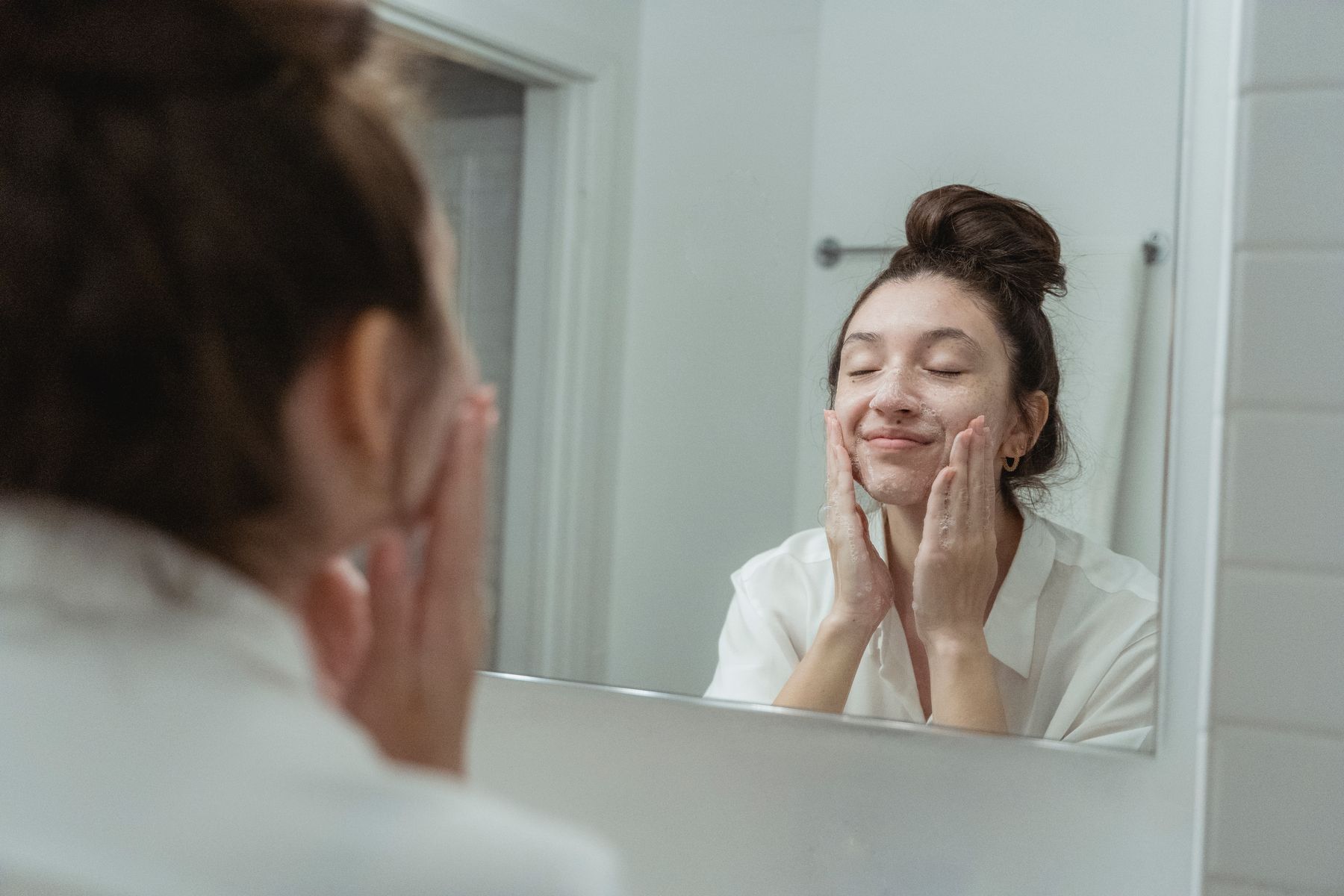
Wet the face and use fingertips to apply the cleanser as directed. AAD advises against scrubbing and against substituting a washcloth or mesh sponge for the fingertips. Keep that physical distinction clear: spreading a product over the intended area is different from repeatedly working one spot with a tool.
Notice the moments when your handling becomes more forceful. Common examples are chasing a patch that feels rough, trying to create more foam or rubbing around the nose because the mirror makes a small area look unfinished. Pause the extra passes rather than setting a longer timer for them. There is no need to invent a universal massage duration when the product already has directions. The amount of lather and a squeaky sensation are poor reasons to add another round.
Resolve removal problems through directions, not force
If makeup or another product remains, identify which product needs a different removal step. Do not make the cleanser perform an unspecified job by pressing harder. Read whether a suitable remover is intended for that area and how it should be used. Eye makeup deserves particular attention to the actual instructions rather than transferring a facial-wash method to the eyelids.
Keep a small practical note if this happens repeatedly: the name of the product being removed, the cleanser used and where residue remained. That note can help a pharmacist, dermatologist or manufacturer answer the specific question. It is more useful than a declaration that your skin is dirty or resistant. Do not apply an unfamiliar solvent, household cleaner or abrasive mixture to solve an unresolved cosmetic-removal problem.
Rinse and use the towel without another scrub
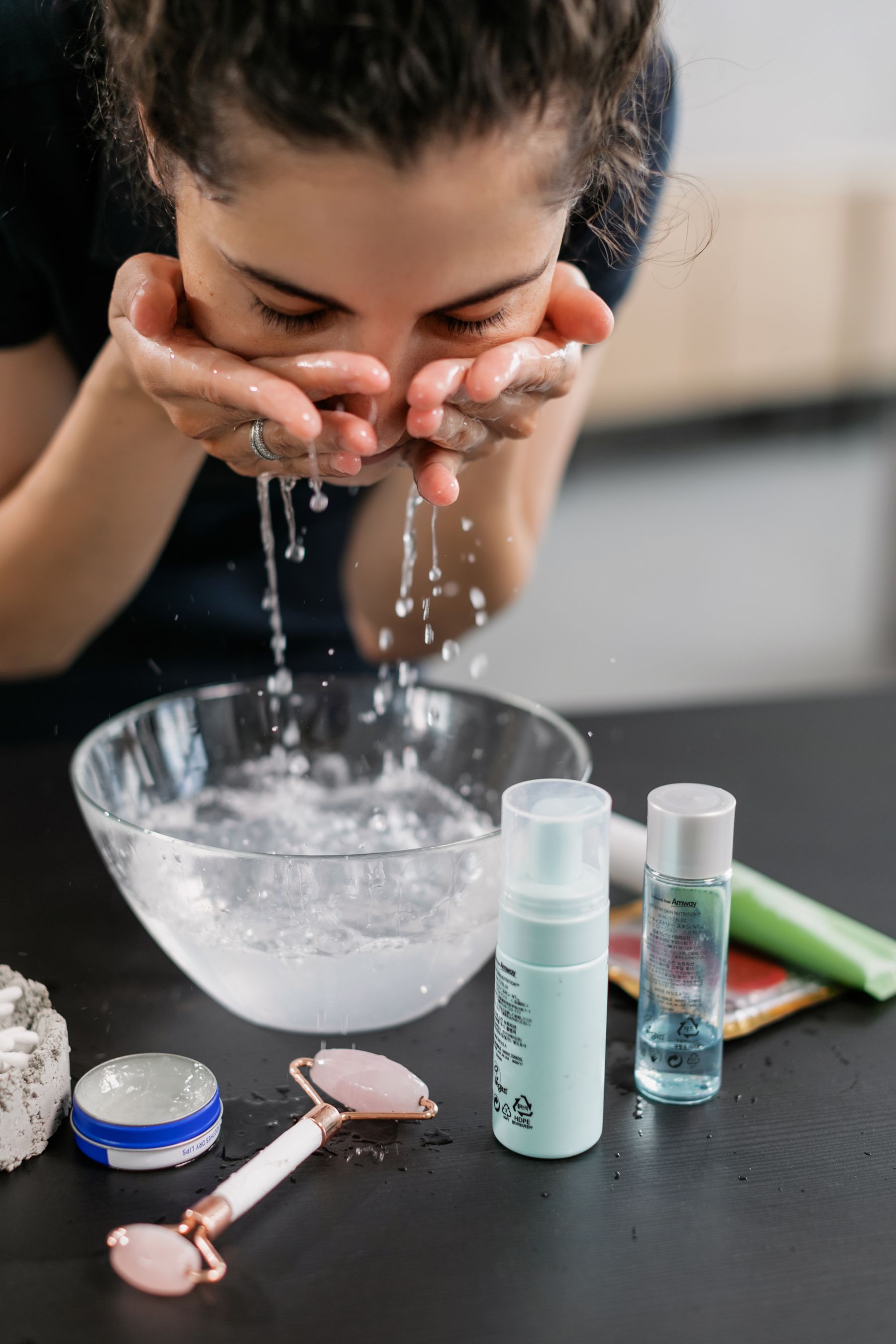
AAD’s basic finish is a lukewarm rinse followed by patting with a soft towel. Work through the rinse deliberately, including areas where product can remain near the hairline or jaw, while following the cleanser’s instructions. The next task is removing the cleanser, not adding a second exfoliation step.
Open the towel and use a clean area to pat. If you find yourself dragging the fabric back and forth to feel completely dry, stop the rubbing motion. Put the used towel in its normal care destination rather than leaving it indistinguishable from a ready clean one. The accompanying rinsing photograph shows cupped water and a bowl; it illustrates an action, not a requirement to copy its props, products or unused roller.
Choose a clear finish and an appropriate washing schedule
If your skin is dry or itchy, AAD includes moisturizer in its basic advice. Use an appropriate product according to its directions and any individual care plan. Keep that step distinct from starting another cleanse because the face does not feel stripped. A finished routine can be brief and unremarkable.
AAD’s general schedule is morning and evening, with washing after heavy sweating as well. This is not a reason to add a wash after every glance in a mirror or every feeling of oiliness. If your work, treatment or skin circumstances require specific instructions, follow those. A convenient way to remember the ordinary schedule is to connect it with existing morning and evening activities rather than create a succession of alarms that encourage unnecessary checking.
Review a problem without turning the bathroom into a test lab
A useful observation is concrete: the product name, the action, the location and when the concern appeared. For example, write that you rubbed the same area repeatedly and noticed discomfort during the wash. Do not label the event a damaged barrier or an allergy on that evidence alone. Avoid deliberate repeat exposure to prove a suspected reaction.
If discomfort, persistent dryness or another concern continues, seek appropriate professional assessment with that short record and the actual product information. You do not need to complete a week of tracking before asking for help. The practical endpoint is a gentle routine you understand and a specific question when it is not working, rather than an expanding set of cleansers and increasingly forceful attempts to make the skin feel different.
Worked routine revision
Maya keeps cleanser, a textured cloth and an exfoliating brush at the sink. In the evening she uses all three, then rubs with a towel because her face still feels slippery. Her revision begins before washing: she identifies the cleanser, reads its directions and puts optional tools away. She prepares a clean soft towel, uses the gentle fingertip method and separates a makeup-removal question from the basic wash. Her note says which product remained near the eye area, so she can ask about the correct removal method. This fictional example illustrates a process change; it does not claim that Maya has a diagnosed condition or that her skin improved after a measured trial.
Questions
Must I double-cleanse every evening?
This guide does not prescribe that. Start with what needs removing and the actual product instructions. If removal is incomplete, resolve that task specifically instead of adding another full wash automatically.
Does more foam prove a better wash?
No. Foam does not establish whether the intended product has been removed or whether the handling is gentle. Use the directions and an understandable rinse rather than chasing a particular sensation.
Can the photographs tell me which cleanser or water temperature to copy?
No. They show ordinary finger contact and rinsing actions. They cannot verify ingredients, pressure or temperature, and the visible products are not endorsed recommendations.
Sources and photography
Photographs are credited beside each image. Their recorded capture dates describe the images; check the current visitor or product information linked above when planning.