Map clothing contact when dry skin feels uncomfortable
When dry-feeling skin is uncomfortable under clothes, a useful first step is to look at what actually touches it: a collar edge, a cuff seam, a tight waistband or a rough outer layer. This is a comfort and clothing guide, not a way to diagnose an allergy. Work with clothes you own, compare specific features, and preserve any required protective function.
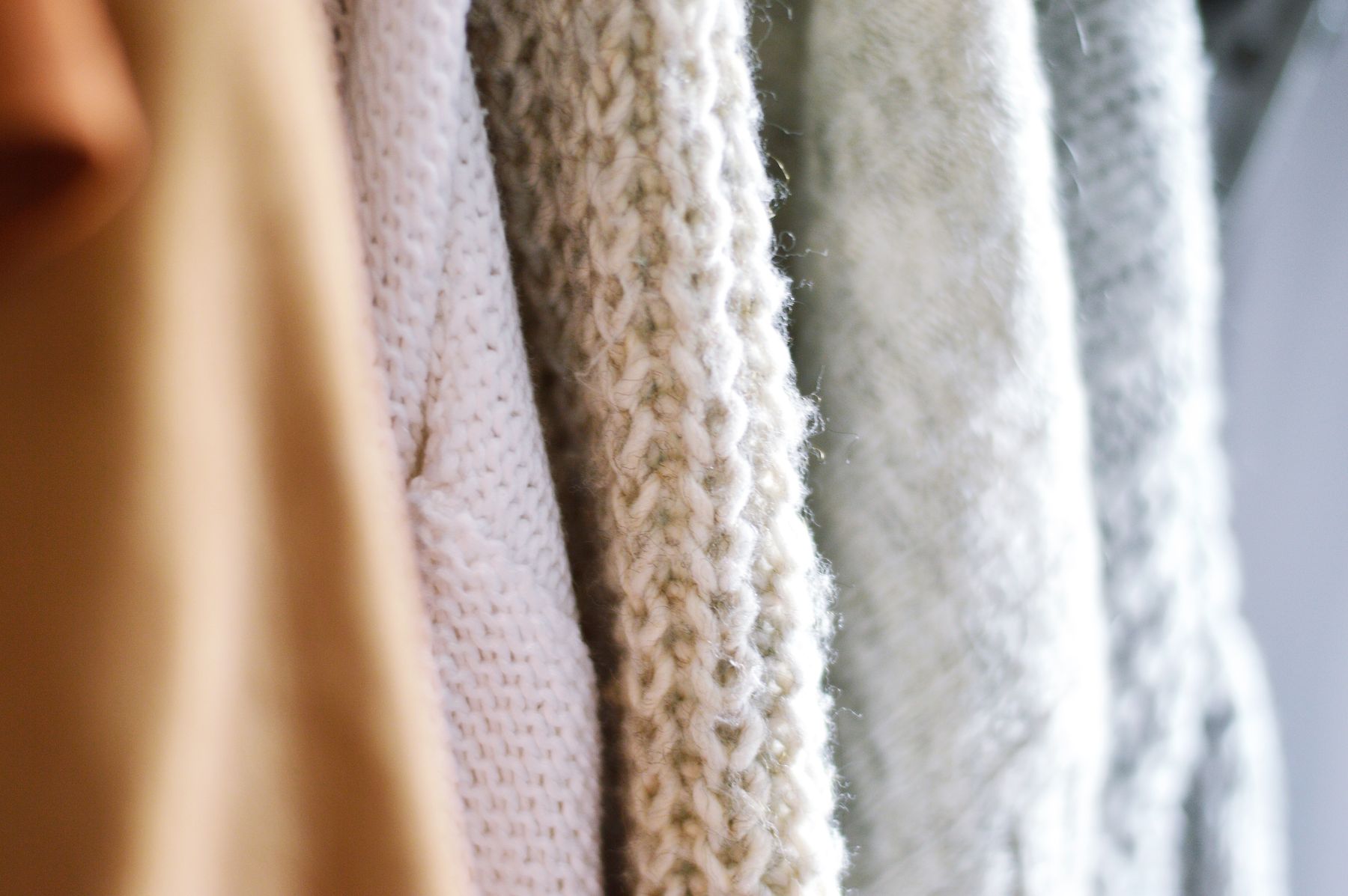
Start with the exact contact point
Instead of declaring an entire wardrobe unsuitable, name the place where discomfort occurs. A neckline that rubs when you turn your head presents a different practical problem from a sleeve seam pressing under a coat. Identify the garment and the movement involved while changing normally. There is no need to keep wearing something uncomfortable to prove the observation.
Look at the inside as well as the outside. Decorative stitching, an internal label, a zipper guard and the edge of a pocket can touch skin even when the main fabric feels smooth in your hand. Lay the garment flat and find the corresponding feature. That direct comparison is more useful than buying a new cream because the whole outfit feels vaguely wrong.
Distinguish fiber, fabric construction and fit
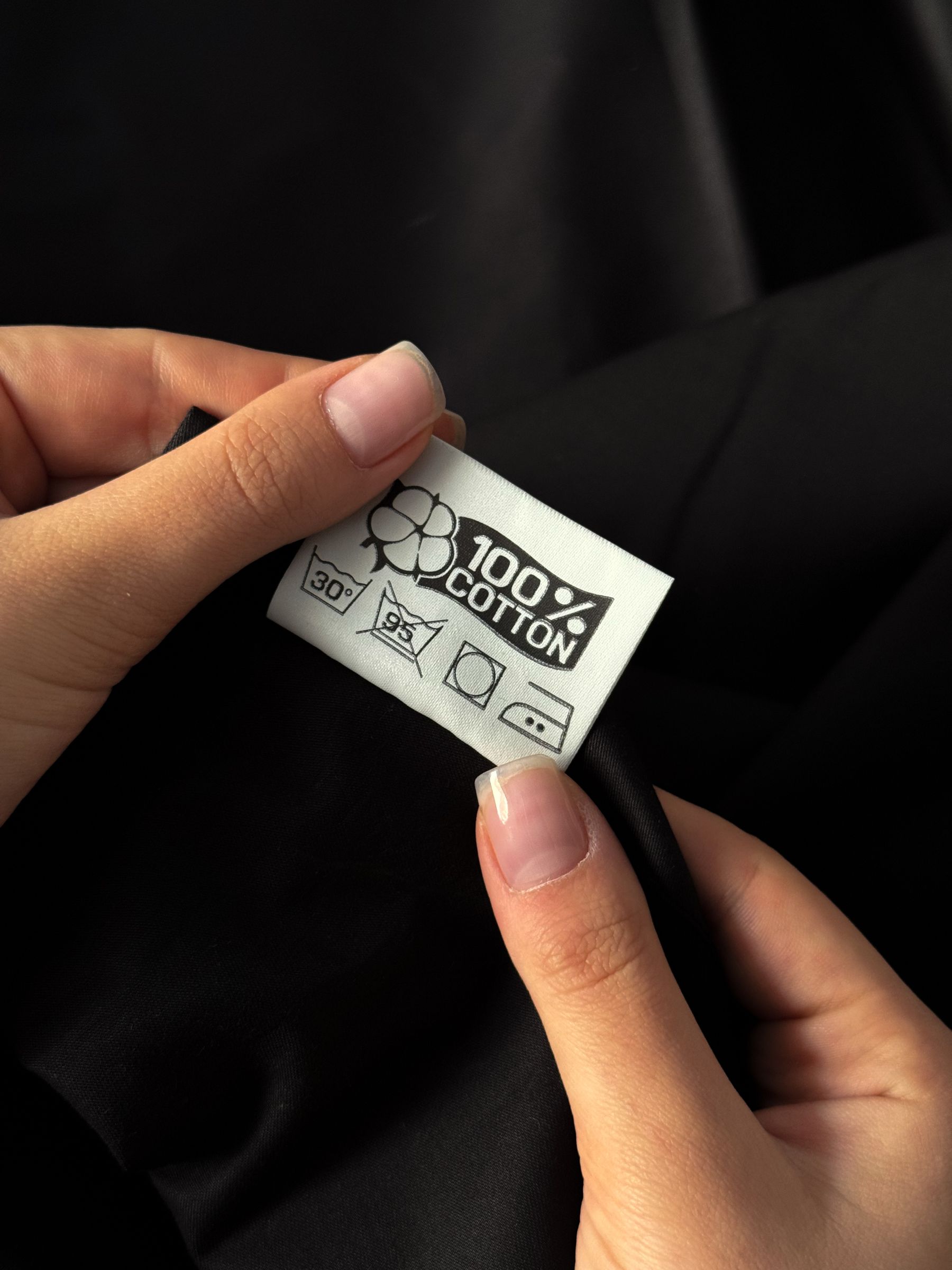
A fiber label answers a composition question. It does not tell you how prominent the seams are, whether the garment pulls across the shoulders or whether its lining reaches the wrists. Two cotton shirts can differ in weave, finishing and shape. Likewise, a loose outer knit may touch skin differently from a fitted version, even if their listed fiber percentages match.
The American Academy of Dermatology advises loose cotton clothing for dry skin and a cotton or silk layer under rough fabrics. It notes that tight clothing and some rough wool or polyester contact may irritate dry, sensitive skin. Use this limited guidance to consider contact and fit; do not turn it into a claim that every garment of one fiber causes a medical condition.
Inspect the label without treating it as a comfort certificate
Find the fiber information and the care information on the actual garment. Photograph a hard-to-read label for your own shopping reference if that helps. Separate a statement such as cotton content from instructions about washing, drying and ironing. A retailer’s category name or the appearance of a knitted stitch is not an adequate substitute for the label in your hand.
Before buying a replacement, inspect the areas that matter to you: inside neck, armhole, cuff and waistband. If shopping online, look for views of the interior or ask a specific question about a seam or lining. Knowing that a garment is cotton does not answer whether its tag sits against the exact patch that already feels uncomfortable.
Check fit in the positions you actually use
Stand, sit and reach as you normally would while trying on a comfortable garment. Notice whether an edge becomes taut only when seated or whether a sleeve pulls at the elbow while typing. A jacket that appears loose when hanging can compress the layers beneath it once zipped. These are ordinary fit observations, not a skin challenge or an experiment that requires discomfort.
If an outfit is uncomfortable now, change to something tolerable rather than completing a timed trial. When possible, compare with a familiar garment that you already wear comfortably. The useful result may be as simple as choosing a different collar or leaving a rough cardigan as an outer layer over a smoother top.
Use an underlayer that covers the real point of contact
An underlayer helps only if it sits between skin and the feature you meant to separate. A sleeveless top will not cover an irritating sleeve seam. A low neckline may leave a rough collar in direct contact. Check coverage while moving, not just while the clothes lie flat on the bed.
Choose an existing comfortable cotton or silk layer as the AAD suggests for rough fabrics. Make sure the combination still fits freely. Adding fabric inside an already tight sleeve can create a new pressure point. If the layering makes the outfit cumbersome, choose another garment rather than stacking more layers until the original purchase becomes wearable at any cost.
Keep garment care specific
Follow the garment’s own care instructions. A request for gentler-feeling clothing is not permission to ignore washing temperatures, dry-cleaning requirements or drying restrictions. If a garment feels different after laundering, consider what actually changed: the item, the wash products, the drying method or a damaged seam. Do not assume you have identified a chemical allergy from one wearing.
Avoid improvised treatments intended to strip finishes or soften fabric with household chemicals. For a troublesome sewn label, examine whether it can be professionally removed without opening a structural seam. Cutting randomly can leave a stiffer edge or damage the garment. A different garment is often simpler than turning an uncomfortable item into a repair project.
Preserve the function of uniforms and protective clothing
Work uniforms, protective gloves and specialist clothing may have requirements beyond appearance. Do not remove linings, alter closures or substitute a random underlayer if that could interfere with required protection. Ask the workplace contact or equipment provider about approved sizes and compatible layers. Bring the specific contact problem, such as a cuff edge that presses during a task.
For ordinary school or office clothing, identify the actual rule before buying replacements. A requirement for a dark shirt may leave several neckline and fabric options. A rule about an outer jacket may still allow a comfortable inner layer. Solving the real requirement can avoid spending money on another item with the same troublesome construction.
Bring persistent symptoms beyond a wardrobe explanation
Clothing changes can improve comfort or reveal a recurring contact point. They cannot rule out a skin condition. If dryness or itching continues, seek professional assessment rather than expanding a personal list of forbidden fabrics indefinitely. Describe the location, the garments and whether changing clothes helped; bring product names if washing or skin-care products seem relevant.
Also tell the clinician when discomfort appears without the garment, interrupts sleep or keeps recurring. Do not photograph a normal-looking sleeve and treat it as evidence that the underlying skin is healthy. The goal is a more useful description and a wearable outfit while the actual concern receives appropriate attention.
The cardigan that only bothered the wrists
Eli thought a whole cardigan was uncomfortable, but the contact was concentrated where its cuffs met the skin while typing. A familiar long-sleeved top covered that point; a sleeveless underlayer did not. When the combination made the wrists too tight, Eli chose a different cardigan for work. The practical conclusion was about that outfit’s coverage and fit, not a diagnosis about wool or a reason to discard every knitted item.
Questions
Does a cotton label guarantee comfort?
No. The label describes fiber content, while comfort also depends on fit, seams, construction and the person wearing it. Inspect the actual inside contact points and use a garment you already tolerate as a practical comparison.
Should I keep wearing the item to test my theory?
No. Change if it is uncomfortable. You can describe what happened during normal use without deliberately repeating a reaction. Continuing or unexplained symptoms belong in a conversation with a clinician rather than a home garment challenge.
Sources and photography
Photographs are credited beside each image. Their recorded capture dates describe the images; check the current visitor or product information linked above when planning.