Stop treating persistent itch as a request for a stronger beauty product
Persistent itch is a reason to understand what is happening, not a signal to keep upgrading beauty products. Begin by reducing scratching and keeping ordinary care simple, then seek assessment when the concern continues or the skin changes. This guide helps you use a small comfort step, describe the pattern and prepare a useful healthcare conversation without trying to diagnose the cause from a photograph.

Notice the itch without assigning a cause
Identify the area and when the itch bothers you: a forearm while working, legs after bathing or a place that wakes you at night. You can describe those facts without deciding that a fabric, an ingredient or a particular skin condition is responsible. AAD explains that itch has many possible causes, so a familiar-looking online image is not enough to identify yours.
If the concern keeps returning, pay attention to its practical effect. Mention interrupted sleep, repeated scratching or difficulty wearing ordinary clothing when arranging care. Avoid waiting for the skin to look dramatic enough for a photograph. A symptom can deserve assessment even when a camera does not show a clear rash.
Interrupt scratching without replacing it with friction
When you notice your hand returning to an itchy place, move it away and pause. AAD warns that scratching can irritate the skin further. Do not substitute a rough towel, brush or scrub for fingernails and assume the underlying action has changed. The goal is to reduce repeated manipulation while deciding what care is needed.
Change position or activity if that helps you stop automatically reaching for the area. Put down the abrasive tool or close the product you were about to add. If the skin is damaged or you have another concerning response, seek appropriate advice rather than attempting a vigorous cleaning session. The moment calls for a smaller action, not a more elaborate beauty procedure.
Use a simple comfort step without chasing stronger products
AAD suggests a cool, damp washcloth on itchy skin for about five to ten minutes or until relief. Use a clean cloth and a comfortable, stable setting. Do not apply extreme cold directly or keep escalating the temperature change because the first sensation feels soothing. This is a comfort measure, not a test that identifies the cause.
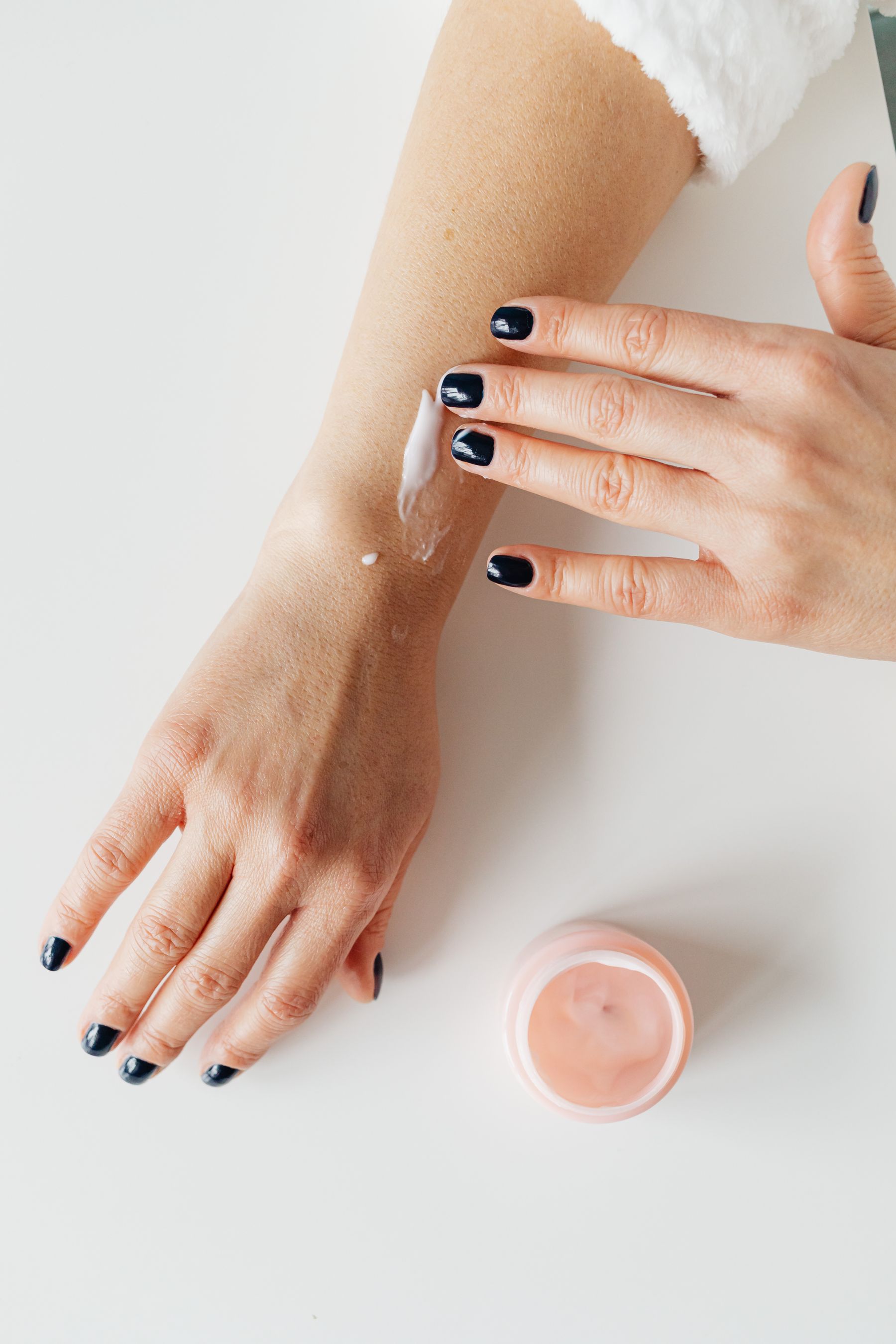
AAD also recommends fragrance-free moisturizer for routine itch comfort and loose cotton clothing. Read your actual product instructions and choose familiar care where appropriate. If basic steps do not help, adding multiple cooling, exfoliating and scented products leaves you with more variables and can postpone a useful assessment. A product photograph cannot verify that a cream has the formulation you need.
Separate everyday comfort from medication advice
A medicine marketed for itch has its own uses, warnings and directions. Do not assume every anti-itch cream is interchangeable or appropriate for every body area. Ask a pharmacist or clinician about the exact product and concern, especially if you already have a treatment plan. Bring the name of anything you have applied rather than referring only to the strongest cream.
Do not increase frequency, combine several preparations or extend a course because the symptom remains. Follow the label or prescribed plan and ask what to do when it is not working. A temporary cooling sensation or a pleasant scent does not establish treatment success. A sustained concern needs the actual symptom and skin assessed, rather than a growing collection of products with similar promises.
Describe the pattern with a few useful details
Keep the account short and factual: where, when first noticed, whether it comes and goes, whether something changed in routine and what you tried. Distinguish a direct observation from a suspicion. For example, itch started after a laundry-product change is useful context, while I proved a detergent allergy may be a conclusion you cannot support.
Include new medicines or supplements when the clinician asks about them, but do not stop a prescribed treatment on your own. If you have ordinary photographs of a visible change, keep the dates and normal colors. Do not scratch an area to make it show in a picture or repeatedly apply a suspected product to create a stronger before-and-after comparison.
Seek assessment when home comfort is not enough
AAD recommends seeing a dermatologist when itch does not improve with the suggested home measures or when changes such as redness, swelling, rash, bumps or sores occur. Contact the appropriate service about the actual concern and follow its advice on timing. If urgent medical attention is needed, do not delay it to complete a diary or search for the perfect product label.
Explain whether the itch affects one area or several, and whether others in the household have a similar concern if that is relevant. Do not diagnose contagion from that fact alone. The clinician can decide what history, examination or testing is appropriate. Keeping the account accurate gives a better starting point than arriving committed to one internet explanation.
Leave the appointment with a workable next step
Ask what the recommended plan is intended to address, how to use any treatment, which ordinary care steps to continue and when to make contact again. If a product or activity is difficult to manage at work or during travel, say so while the plan can be clarified. Do not quietly substitute a more convenient beauty product and assume it has the same role.
Keep the instructions and exact treatment names available. If the concern persists or changes, follow the agreed follow-up route with an account of what you actually did. The goal is relief and appropriate assessment, not proving that you can manage every recurring symptom alone. A simple understandable routine makes the next decision clearer for both you and the professional helping you.
An itch becomes a clear appointment request
Lee notices repeated forearm itching during the evening and has begun rubbing it with a towel. Lee stops that friction, uses a simple clean cool-cloth comfort step and avoids buying several new scrubs. Because the itch continues, Lee contacts a clinician and describes the area, when it began, interrupted sleep and the products already used. Lee does not scratch the skin for a photograph or claim an allergy based on a recent laundry change. The conversation starts with the pattern, not a diagnosis.
Questions
Does relief from a cool cloth tell me the diagnosis?
No. A comfort response does not establish the cause of an itch. If the problem persists or the skin changes, seek assessment and describe what you observed.
Should I keep buying a stronger beauty product until it stops?
No. Persistent itch is not a product-strength ladder. Keep the actual products and symptoms identifiable, follow directions and ask a healthcare professional about the next step.
Sources and photography
Photographs are credited beside each image. Their recorded capture dates describe the images; check the current visitor or product information linked above when planning.