Blot visible oil without turning the day into repeated cleansing
Visible shine can tempt a reader to rub, scrub or wash repeatedly. AAD’s oily-skin guidance offers gentler handling, including blotting papers used without rubbing. This guide separates a cosmetic preference about shine from a decision to intensify the whole skincare routine.
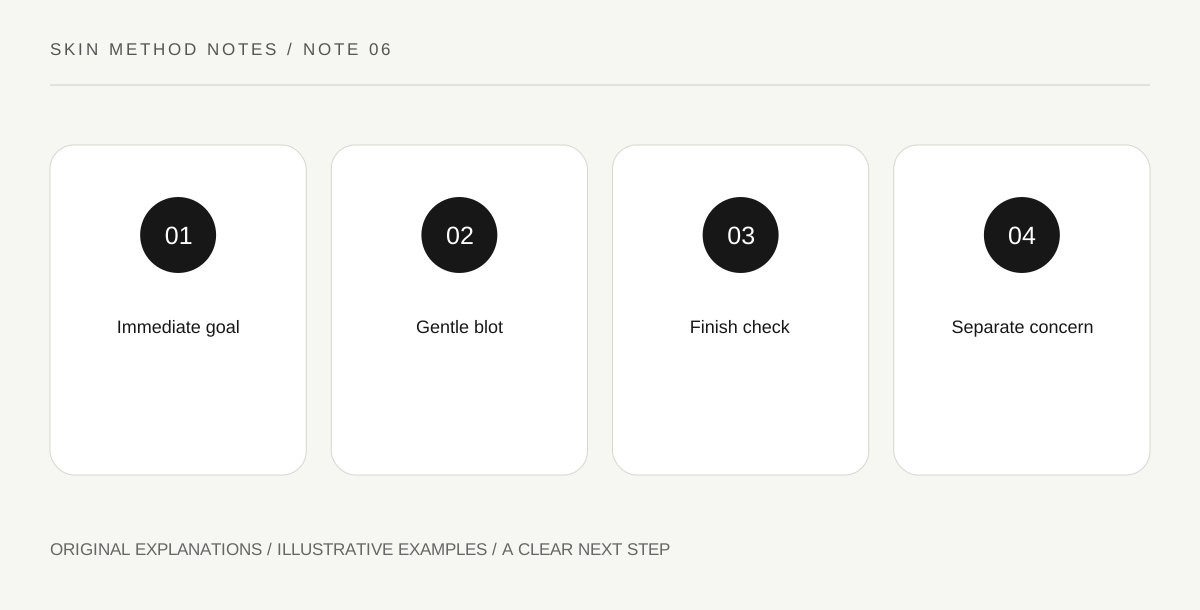
Original explanatory diagram. Read the full method and limitations below.
Name the immediate goal
If the goal is reducing visible surface shine before a meeting, say that plainly. It is different from diagnosing an underlying condition or trying to remove every trace of oil. A mirror view under strong light can make a small area feel more urgent than it is. Keep the task bounded so a quick cosmetic adjustment does not automatically trigger another full cleanse and several additional products.
Use blotting as a gentle contact
AAD describes gently pressing blotting paper against the face and allowing it to absorb oil, rather than rubbing it across the skin. Follow the specific product’s directions and keep the material appropriate and clean. Do not substitute a rough household sheet or an abrasive wipe simply because it can absorb liquid. The handling method matters independently of the product’s marketing language about mattifying or deep cleaning.
Review what happens around makeup
A cosmetic finish may change when paper, powder or another layer contacts it. Assess a small practical adjustment without treating the visible result as a skin-health test. If the makeup shifts, do not compensate with increasingly forceful wiping. The goal remains a preferred finish for the immediate situation. Product compatibility and directions belong to the actual items, not a universal rule that every oily-looking area needs another powder layer.
Keep persistent concerns in the right conversation
If oiliness accompanies ongoing irritation, acne or another concern, seek suitable professional advice rather than self-prescribing an aggressive routine. A short observation can state where shine appears and what handling you used. It cannot prove a skin type or the cause of symptoms. The useful everyday choice is a gentle bounded action, with a separate route to care when the issue is more than an ordinary preference about appearance.
Illustrative worked example
Illustrative midday adjustment: A reader notices shine on the center of her face before a call. She uses an appropriate blotting paper gently according to its directions rather than rubbing with a rough towel or washing again immediately. She checks whether the cosmetic finish remains acceptable and stops the adjustment there. Persistent irritation is recorded as a separate concern for appropriate care, not treated as a reason to scrub the shiny area harder.
Questions that come up
Does visible shine mean the skin is dirty?
Do not use shine alone as a dirt diagnosis. This exercise addresses a cosmetic surface preference and gentle handling, not a test of hygiene or a reason for repeated scrubbing.
Should I remove all oil before the day can continue?
No. A realistic task can be a small appearance adjustment. Trying to eliminate every trace can lead to unnecessary repeated contact without addressing a medical concern appropriately.
References and scope
These sources support the factual background. Examples and exercises are original illustrative teaching material. References do not imply endorsement.
- AAD Oily skin care — Gentle handling and blotting rather than aggressive rubbing.